

Table of Contents
- What Ethical Sourcing Means and Why It Matters
- Understanding Ethical Product Certifications
- How to Check a Brand's Supply Chain
- What Is an Example of Ethical Sourcing
- Spotting Greenwashing in Fashion
- Your Step-by-Step Verification Checklist
- Frequently Asked Questions
Last Updated: October 18, 2026
What Ethical Sourcing Means and Why It Matters
Ethical sourcing means buying products made with fair labor practices, environmental responsibility, and transparent supply chains. Choosing ethically sourced products supports businesses that treat workers fairly, minimize environmental harm, and operate with accountability.
We believe every purchase signals the production practices you support.
More people are asking harder questions about where their clothes come from and who made them. Supply chains are complex, but the information is there if you know where to look.
Understanding Ethical Product Certifications
Third-party certifications are your fastest way to verify ethical claims: an independent organization has audited the brand's practices against specific standards. Not all certifications carry equal weight.
Key Certifications to Look For
Look for these established certifications when shopping for ethically sourced products:
- Fair Trade Certified: Verifies fair wages and working conditions for workers in developing countries (What is Fairtrade?). Most common on coffee, chocolate, and textiles.
- B Corp Certified: Tests a company's environmental and social performance across its entire operation. Requires annual recertification.
- GOTS (Global Organic Textile Standard): Confirms organic fiber content and ethical labor practices in textile production.
One label doesn't mean a brand is perfect everywhere, only that it's been tested in specific areas and passed. A brand might be Fair Trade Certified for its coffee but not transparent about its packaging suppliers.
How to Verify a Certification's Legitimacy
Not every label is a real certification, some brands create official-sounding logos with no independent verification. Here's how to check:
- Look up the certifier: Search the certification name plus "official" or "verify." Real certifiers maintain searchable databases where you can confirm a brand's status.
- Check the certifier's standards: Read what they actually audit. If the standards don't match the product's claims, something's wrong.
- See if they're recognized: Established certifiers like Fair Trade USA or B Lab are known across the industry. An unknown certifier with no independent information is a red flag.
How to Check a Brand's Supply Chain
Certifications are a starting point, not the whole story. A supply chain page is a claim, not proof, verification means tracing that claim to an independent source, a named facility, or a documented process.
Questions to Ask Before You Buy
Before adding an item to your cart, ask yourself these questions:
- Where is it made? A brand that names specific factories is more transparent than one that says "various locations."
- Who owns the factory? Brands that own their factories often have tighter control over conditions.
- Are workers paid living wages? Ethical sourcing goes beyond minimum wage; a living wage covers basic needs in that region.
If a brand can't answer these questions, that's telling. Transparency isn't optional for truly ethical companies, it's fundamental.
How to Verify the Answers, Not Just Collect Them
The questions above only help if you can check the answers. Use this sequence to move from claim to evidence:
- Trace the claim to a named facility or region. If the brand says "made in Portugal," look for a factory name, city, or supplier list. A named facility can be cross-checked against certification databases, business registries, or labor reporting; an unnamed region cannot.
- Check the certifier's public database, not the logo. Search the brand name and facility name separately. A brand-level certificate doesn't always cover every product line or factory, so confirm the scope matches the item.
- Read the audit scope. An audit covering worker safety may not cover wages, subcontracting, or raw materials. A common pattern: certification covers final assembly while fabric or trim comes from unverified suppliers.
- Look for chain-of-custody evidence. For materials, this means certified content is tracked from source to finished product. Ask whether the brand publishes a transaction certificate or material balance document, or whether the claim stops at "contains organic cotton" without saying how much or from where.
- Check for independent grievance channels. A brand-run hotline is weaker evidence than an independent mechanism like a third-party ethics hotline or union agreement. Look for non-retaliation and remediation language, not just reporting.
- Compare the story across surfaces. Read the product page, impact report, and third-party coverage. Inconsistencies between marketing copy and disclosed supplier lists are a stronger signal than any single vague phrase.
Red Flags in Supply Chain Transparency
Watch for these warning signs:
- Vague factory locations: "Made in Asia" or "multiple suppliers" without naming them.
- No third-party verification: Ethical claims with no independent audit or certification.
- Changing stories: The supply chain story shifts between marketing materials and product tags.
When the Supply Chain Is Too Complex to Verify
Many products, electronics, footwear, multi-material garments, have supply chains with dozens of tiers, so you'll rarely verify every input. Prioritize the material issues for that category: for a cotton t-shirt, fiber origin and factory labor conditions; for a leather jacket, tannery chemical management and animal-welfare sourcing; for electronics, mineral sourcing and assembly labor.

When information is incomplete, compare options on transparency rather than perfection. A brand that discloses factories, publishes audit summaries, and names its certification scope beats a stronger-sounding claim with no traceable evidence.
What Is an Example of Ethical Sourcing
Consider a Fair Trade Certified cotton t-shirt. The cotton was grown by farmers who received a guaranteed minimum price regardless of market fluctuations, under environmental standards limiting pesticide use.
Compare that to a generic t-shirt with no certifications and no supply chain information: you don't know if the cotton was sprayed with pesticides, what workers were paid, or how many hours they worked.
Our Contrast Vegan Leather Jacket is a good example: it's made from high-quality vegan leather, a cruelty-free material, with ethical manufacturing practices.
Spotting Greenwashing in Fashion
Greenwashing is when a brand makes ethical claims that sound impressive but don't hold up to scrutiny, one of the biggest obstacles to finding truly ethically sourced products. The useful skill isn't memorizing banned words; it's testing whether a claim is specific, scoped, and verifiable.
Common tactics include vague words like "eco-friendly," "sustainable," or "ethical," or highlighting one small initiative like recycled packaging while ignoring worker wages or material sourcing.
Common Misleading Claims and How to Decode Them
Learn to recognize these misleading phrases:
- "Natural" or "organic": Without a certification like GOTS or USDA Organic, this is meaningless, anyone can write it on a label.
- "Eco-friendly": No legal definition. Ask what specific environmental practices they use.
- "Sustainable": Vague and undefined. Sustainable in what way? For how long? At what scale?
The pattern is simple: if a claim doesn't name a specific standard, certification, or measurable practice, it's likely greenwashing. Ethical brands are specific because they have nothing to hide.
Contrast Vegan Leather Jacket →
A Claim-Testing Method You Can Apply to Any Product
Instead of asking whether a phrase sounds ethical, run it through four tests:
- Specificity test. Does the claim name a standard, facility, material, or measurable outcome? "Made with 100% GOTS-certified organic cotton" is specific; "made with organic cotton" is not, because it doesn't say how much or certified by whom.
- Scope test. What part of the product does the claim cover? A certification may apply to the main fabric but not the lining, trim, dyes, or packaging. Partial certification is common and not automatically misleading, but the brand should say what's covered. A logo implying the whole product is certified when only one component is is a greenwashing signal.
- Verification test. Can you confirm the claim independently? Search the certifier's database, look for a transaction certificate or supplier disclosure, and check whether the claim appears in more than one place. A claim that exists only in marketing copy is unverified.
- Baseline test. For comparative claims, what is the comparison point? "50% less water" needs a stated baseline, methodology, and time frame. Without those, the number is decoration rather than evidence.
How to Interpret Mixed or Partial Certification
Most products aren't certified as a whole.
Map certifications to the components they cover: which materials are certified, which facilities are in scope, which parts are unverified.
Trade-offs are unavoidable: a fully certified product may cost more or be harder to find, and a partially certified product from a transparent brand may beat a fully certified claim you can't verify.
Red Flags That Survive a Second Look
- A logo with no database match. The certification name appears on the product, but the certifier's public search doesn't show the brand or facility.
- A scope that shrinks under scrutiny. Marketing implies full-product certification, but the certifier's listing covers only one material or facility.
- Percentages with no baseline. "Carbon neutral," "50% recycled," or "30% less waste" without a stated comparison, method, or time frame.
None of these proves bad faith, they're signals that a claim hasn't earned your trust. Downgrade it, look for a more transparent alternative, and revisit the brand if new evidence appears.
Your Step-by-Step Verification Checklist
Here's a practical system for every purchase, about five minutes per product.
Before Adding to Cart
Work through these steps before you buy:
-
Check for certifications: Look for logos from Fair Trade, B Corp, GOTS, or other recognized certifiers. Search the brand name plus the certification name to verify it's current.
-
Find supply chain information: Look for a "supply chain," "manufacturing," or "transparency" page on the brand's site. Write down what you find.
-
Identify the factories: Does the brand name specific factories or just regions? Search those factory names online to see if other brands use them and what reviews say.
-
Check for wage information: Look for statements about living wages or fair compensation. If you find nothing, move on.
-
Search for independent reviews: Search "[brand name] + ethical practices" or "[brand name] + supply chain." Look for reputable fashion sustainability publications, not just the brand's marketing.
-
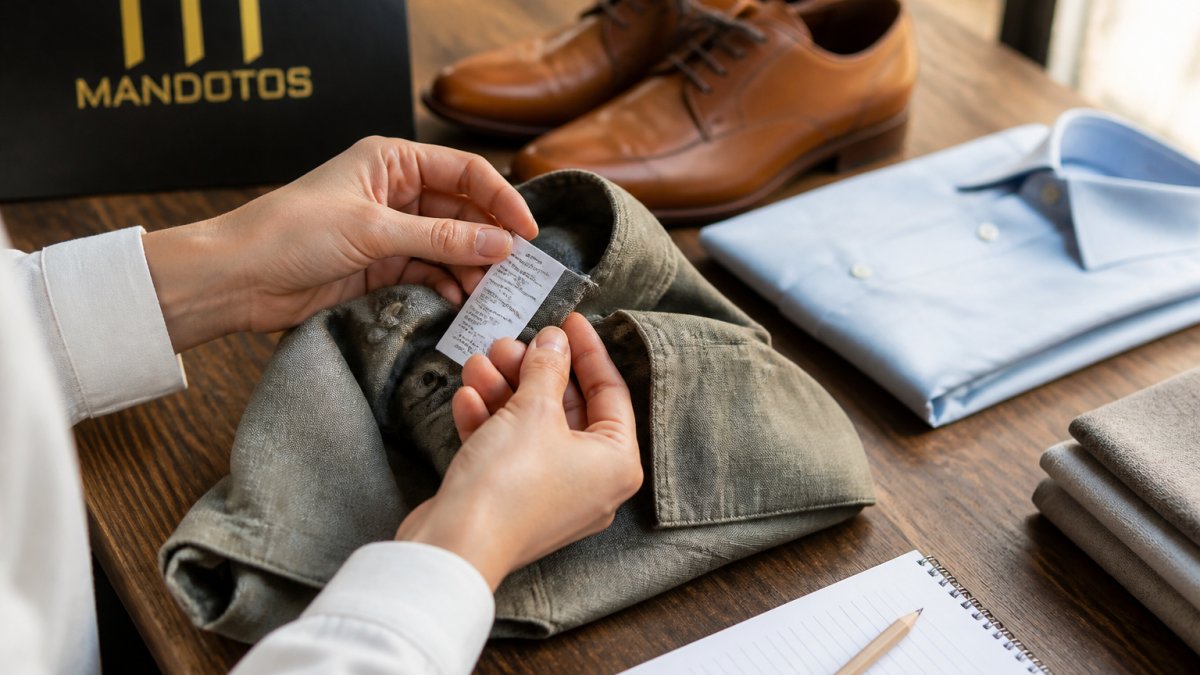
Read the product label: Check the material content and country of origin, not everything, but a data point.
After Purchase: Building Your Verification Habit
Once you've bought a product, use these steps to refine future choices:
- Document what you learned: Note the brand, certifications found, and transparency level. Build your own reference list.
- Track how it holds up: Durability is part of ethics, a product that lasts longer is more sustainable.
- Follow the brand over time: A company that's transparent today might get acquired and shift practices.
| Step | What to Check | Why It Matters |
|---|---|---|
| Certifications | Fair Trade, B Corp, GOTS, Cradle to Cradle | Independent verification of claims |
| Supply chain | Named factories, countries, processes | Transparency shows accountability |
| Wages | Living wage statements or Fair Trade status | Ensures workers earn enough to live |
| Grievance process | Worker complaint mechanisms | Shows brand takes problems seriously |
| Audit frequency | Annual or surprise audits mentioned | Regular checks catch ongoing issues |
| Material sourcing | Organic, recycled, or responsibly sourced fibers | Reduces environmental impact |
Building this habit takes time. The goal isn't perfection, it's making more informed choices over time.
Finding ethically sourced products takes effort, but it pays off. We've curated collections that emphasize quality and durability, pieces designed to last, which is itself a form of ethical consumption. Start with one verified purchase, then build from there. Your choices matter.
Frequently Asked Questions
How can you tell if a product is ethically sourced?
Check for third-party certifications like Fair Trade, GOTS, or B Corp on the product label. Research the brand's website for supply chain transparency and worker treatment details. Ask the retailer or brand directly about manufacturing locations and labor practices. Be skeptical of vague claims like 'eco-friendly' without specific certifications. Cross-reference multiple sources before trusting ethical claims.
What are the most reliable ethical product certifications?
Fair Trade Certified, Global Organic Textile Standard (GOTS), B Corp Certification, and Cradle to Cradle are among the most rigorous. These require independent audits and ongoing compliance. However, not all certifications carry equal weight, research what each one actually verifies. Some focus on labor practices, others on environmental impact. Look for certifications that publish audit results and allow third-party verification of their standards.
How do I check whether a clothing brand treats workers fairly?
Visit the brand's website and search for supply chain transparency reports or labor practice statements. Reputable brands publish details about factory locations, worker wages, and grievance mechanisms. Check independent platforms that rate brand transparency. Ask the brand directly via email about certifications, audit results, and worker welfare programs. Be wary of brands that avoid answering or provide only vague responses about their manufacturing practices.
How do you spot greenwashing in ethical product claims?
Watch for claims without specific proof: 'sustainable,' 'eco-friendly,' or 'ethical' without certifications or data. Greenwashing often uses nature imagery and soft language to suggest responsibility without backing it up. Check if the brand discloses third-party audits, supply chain details, or worker outcomes. Compare claims against independent reviews. If a brand makes bold ethical statements but avoids transparency, it's likely greenwashing.