

Table of Contents
- Slow Fashion vs Fast Fashion: What You're Actually Paying For
- The Real Cost Breakdown: Why Higher Price Tags Exist
- Cost Per Wear Clothing: The Math That Changes Everything
- Affordable Slow Fashion Brands: What to Look For
- Sustainable Fashion on a Budget: Practical Strategies
- When Slow Fashion Isn't Worth the Extra Cost
- How to Judge Quality and Avoid Greenwashing
- The Verdict: Is Slow Fashion Worth It for You?
- Frequently Asked Questions
Last Updated: October 14, 2026
Slow Fashion vs Fast Fashion: What You're Actually Paying For
The question "is slow fashion worth the extra cost" comes down to one uncomfortable fact: a $15 shirt and a $75 shirt can look identical on the rack. What separates them is everything you cannot see at a glance.
At Mandotos International, we curate pieces meant to be kept rather than cycled out, so we have a clear stake in this debate.
The core difference is not style. It is what happens before the garment reaches you.
| Factor | Slow Fashion | Fast Fashion |
|---|---|---|
| Production scale | Small batches | Mass production |
| Materials | Durable fabrics | Cheaper blends |
| Labor | Fair wages, ethical production | Often opaque supply chain |
| Lifespan | Years of wear | One or two seasons |
| Price per item | Higher price tag | Low upfront cost |
A slow piece costs more because fewer units absorb the same design, labor, and material costs. A fast piece costs less because volume and cheap inputs drive the price down. That trade-off shapes everything that follows.
The Real Cost Breakdown: Why Higher Price Tags Exist
Higher price tags exist because ethical production, better fabric, and small-scale manufacturing all cost more per unit. There is no hidden markup conspiracy here. When a factory pays fair wages and runs smaller runs, each garment carries more of the overhead.
Four things push slow fashion prices up:
- Materials. Quality wool, cotton, and durable blends cost more than synthetic substitutes that wear out fast.
- Labor. Fair wages and safe working conditions raise production costs, and that is the point.
- Volume. Mass production spreads fixed costs across millions of units. Small-scale production cannot.
- Durability. Durable design and reinforced construction take more time per garment.
The environmental impact follows the same logic. Fewer, longer-lasting garments mean less waste and fewer resources consumed per year of wear.
Cost Per Wear Clothing: The Math That Changes Everything
Cost per wear is the price of a garment divided by the number of times you actually wear it. That single number exposes why cheap clothing is often the more expensive choice.
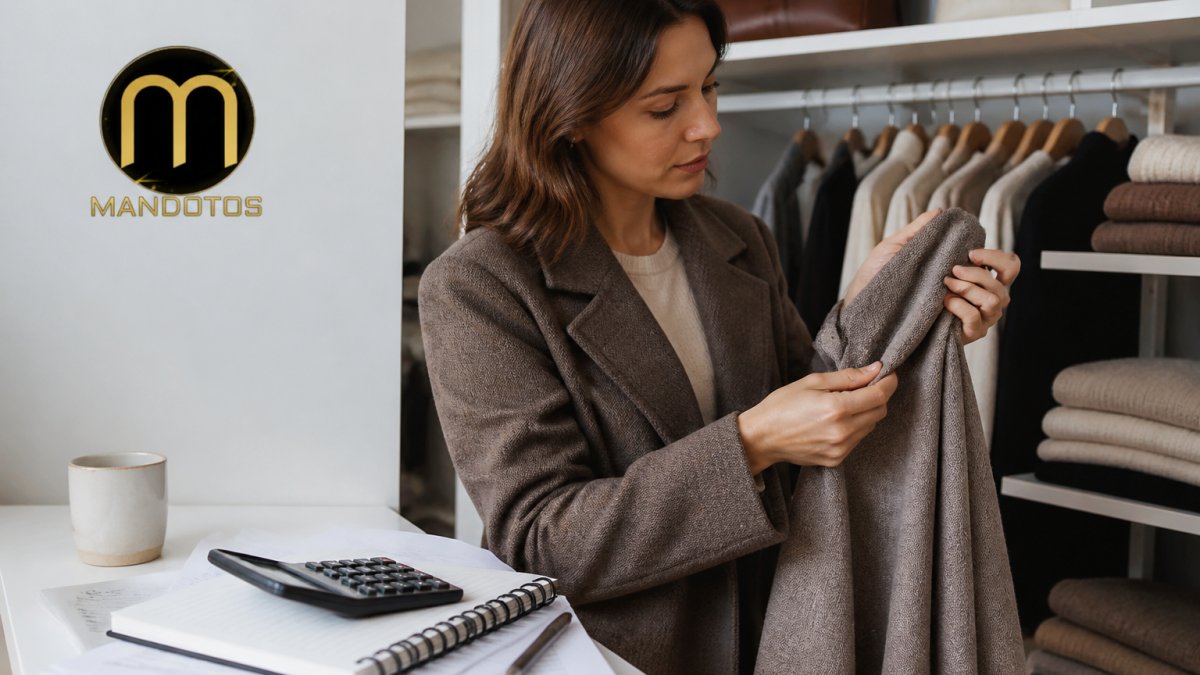
Start with the basic math:
| Garment | Price | Wears Before Wearing Out | Cost Per Wear |
|---|---|---|---|
| Fast fashion top | $15 | 15 wears | $1.00 |
| Slow fashion top | $60 | 150 wears | $0.40 |
| Fast fashion coat | $80 | 2 seasons | $40 per season |
| Slow fashion wool coat | $180 | 8 seasons | $22.50 per season |
The slow piece costs four times more upfront and less than half as much per wear. That gap widens once you factor in replacement frequency.
But the real ownership cost goes further. Consider a slow-fashion wool coat priced at $180 and a fast-fashion coat priced at $80. Over eight winters:
- Fast fashion coat: You replace it every two seasons, so you buy four coats at $80 each, $320 total. Add dry cleaning at roughly $15 per season (eight cleanings), $120. Add minor repairs (buttons, lining) at about $10 per season, $80. Total: $520. Resale value after two seasons is near zero.
- Slow fashion coat: You buy one coat at $180. Dry cleaning at $15 per season (eight cleanings), $120. Repairs are less frequent, say $5 per season, $40. Total: $340. After eight winters, a well-maintained wool coat can often be resold for $40-$60, reducing net cost to roughly $280-$300.
That is a difference of more than $200 over eight years, even before accounting for the environmental cost of producing and shipping four coats instead of one.
The math only works if you actually wear the item. A pricey piece that sits unworn has an infinite cost per wear. That is the trap.
Affordable Slow Fashion Brands: What to Look For
Affordable slow fashion exists, but it rarely looks like a luxury label. It looks like a smaller brand selling fewer styles made from better materials at a fair price. The trick is knowing what to check before you buy.
Look for these signals:
- Fabric content listed in full. "100% cotton" or "wool" beats vague terms like "premium blend."
- Construction details. Reinforced seams, functional pockets, and lined interiors signal durability.
- Transparent sourcing. Brands that name their materials and production methods are easier to trust.
- Timeless design. Pieces that do not chase a single-season trend stay wearable longer.
- Real reviews. Customer feedback about fit and longevity tells you more than marketing copy.
Our own catalogue leans on this approach. The Eco-Friendly Vegan Leather Tote Bag at $34.99 is built from durable vegan leather in a 15x12x5 size that works for both office and weekend use. It is the kind of piece that earns its cost per wear because it does not go out of style.

Sustainable Fashion on a Budget: Practical Strategies
Sustainable fashion on a budget is not about spending more. It is about spending deliberately. You can build a durable wardrobe without paying full retail for every piece.
Here is how we would approach it:
- Buy fewer essentials and wear them longer
- Shop secondhand and thrift stores for basics
- Join clothing swaps with friends or local groups
- Repair before you replace, especially on outerwear
- Resell pieces you no longer wear to fund new ones
- Wait for end-of-season sales on durable staples
Thrifting and secondhand clothing let you access well-made garments at a fraction of retail. A clothing swap turns items you have outgrown into something new to you at zero cost. Buying fewer essentials forces you to choose pieces you will genuinely wear.
A balanced total-cost view includes care, repairs, resale, and replacement frequency, not just the sticker price. A $90 coat you wear for eight winters and then resell beats a $40 coat you replace every year.
Eco-Friendly Vegan Leather Tote Bag - Stylish and Sustainable Design →
When Slow Fashion Isn't Worth the Extra Cost
Slow fashion is not always worth the extra cost, and pretending otherwise helps no one. There are real situations where the premium does not pay off.
Use this decision framework before paying more for a slow-fashion piece:
1. Will you wear it at least 30 times? Cost per wear only improves with repeated use. If you expect to wear an item fewer than 30 times, a formal gown, a costume, a single-event outfit, the premium rarely pays off. A $200 dress worn twice costs $100 per wear; a $40 fast-fashion alternative worn twice costs $20 per wear. In that case, the cheaper option is the rational choice, even if it is less sustainable.
2. Is your body or lifestyle changing quickly? New parents, growing children, and people in rapid weight transitions often outgrow garments before durability matters.
3. Can the brand prove its claims? An expensive item with no transparency is just expensive.
4. Does the item fit your actual life? A beautifully made wool coat is a poor purchase if you live in a warm climate.
5. Is the care burden manageable? A garment that requires dry cleaning only or delicate hand-washing adds ongoing cost and friction.
**6.
When slow fashion may not be worth it:
- One-off or rare-use items, costumes, special-event wear, or trend pieces you will wear once or twice.
- Fast-changing sizes, pregnancy, childhood growth, or significant weight fluctuation.
- Unverifiable claims, brands that charge premium prices without transparency about materials or labor.
- Lifestyle mismatch, garments that do not fit your climate, work, or daily routine.
- High-maintenance care, pieces that require costly or time-consuming upkeep you will not sustain.
The honest answer is that slow fashion rewards people who wear their clothes often and choose pieces that fit their real lives.
How to Judge Quality and Avoid Greenwashing
Avoiding greenwashing starts with demanding specifics. Vague terms like "eco-friendly" and "sustainable" mean little without evidence behind them.
Use this checklist before trusting a sustainability claim:
- Does the brand name its materials and where they come from?
- Are labor practices and wages addressed, or just the fabric?
- Is there third-party certification or independent verification?
- Does the price match the claimed quality, or is it inflated?
- Can you find real customer feedback about durability?
The FTC Green Guides set out how environmental marketing claims should be substantiated, which gives you a useful benchmark. If a brand cannot back up a claim, treat it as unproven. Responsible consumption means asking questions, not accepting labels.
A well-made garment usually shows its quality in the details: stitching, weight, hardware, and finish. Those signals are harder to fake than a slogan.
The Verdict: Is Slow Fashion Worth It for You?
For most people who wear their clothes regularly, slow fashion is worth the extra cost. The cost per wear math favors durable pieces, and the environmental and community benefits are real. The premium stops making sense only when you will not wear the item enough to earn it back.
If you want a starting point, our Contrast Vegan Leather Jacket at $99.76 pairs a tailored fit with durable vegan leather, and the Women's Coat Lamb Wool at $55.23 delivers warmth meant to last multiple winters. Both are the kind of timeless pieces that justify their price over years, not weeks.


Frequently Asked Questions
What are some affordable slow fashion brands?
Affordable slow fashion doesn't mean cheap. It means brands that prioritize quality materials, ethical production, and timeless designs at accessible prices. Look for smaller labels that sell directly to consumers, offer transparent supply chain information, and focus on durable fabrics like wool, organic cotton, or high-quality vegan leather. For example, a vegan leather tote bag at $34.99 or a plaid wool jacket at $48.67 can be affordable entry points into slow fashion if they last for years. Check for certifications like Fair Trade or B Corp, and read customer reviews about longevity.
Why does slow fashion cost more than fast fashion?
Slow fashion costs more because it reflects the true cost of making clothes. Fast fashion relies on mass production, cheap synthetic materials, and often underpaid labor to keep prices low. Slow fashion uses higher-quality fabrics, pays fair wages, and produces in smaller batches. For instance, a wool coat requires expensive raw materials and skilled craftsmanship, while a polyester jacket can be made quickly and cheaply. The higher price tag also covers ethical labor practices and environmental standards that fast fashion often ignores. You're paying for durability, ethics, and a garment designed to last.
How can I tell whether a clothing item is worth its price?
Calculate the cost per wear. Divide the price by the number of times you expect to wear it. A $100 jacket worn 100 times costs $1 per wear, while a $20 jacket worn 5 times costs $4 per wear. Also check the materials, stitching, and hardware. Quality wool, sturdy zippers, and reinforced seams signal longevity. Look for timeless designs that won't go out of style next season. If a piece fits your wardrobe, suits your lifestyle, and is made to last, it's likely worth the investment. Avoid impulse buys and focus on versatility.
Can you build a sustainable wardrobe on a budget?
Yes. Start by shopping secondhand or thrifting for unique pieces. Organize clothing swaps with friends. Invest in a few high-quality essentials that work across multiple outfits, like a versatile wool jacket or a durable tote bag. When buying new, prioritize items that fill a gap in your wardrobe and can be worn often. Look for sales on ethical brands, and use cost per wear to guide decisions. Building a sustainable wardrobe on a budget is about buying less and choosing wisely, not spending more.
The real challenge is not deciding whether slow fashion is worth it. It is finding well-made pieces you will actually wear for years without overpaying for the label. At Mandotos International, we curate fashion, footwear, and accessories chosen for durability and design, with free shipping in the US on orders $50+ and worldwide shipping on qualifying orders. Join now and build a wardrobe that earns its cost per wear.