

Table of Contents
- Start With a Wardrobe Audit: Assess What You Already Own
- How to Identify High-Quality Clothing That Lasts
- Building Capsule Wardrobe Essentials That Work Together
- How to Care for Clothes to Make Them Last Longer
- Shop Second-Hand and Vintage to Reduce Textile Waste
- Ethical Shopping: Transparency and Greenwashing Awareness
- How to Build a Sustainable Wardrobe on Your Budget
- End-of-Life Garment Management: What Happens When Clothes Wear Out
- Frequently Asked Questions
Last Updated: October 2, 2026
Start With a Wardrobe Audit: Assess What You Already Own
Building a sustainable wardrobe begins with understanding what you already have. A wardrobe audit forces you to see patterns in what you actually wear versus what sits unworn, revealing duplicates and missed styling opportunities.
Pull everything from your closet and lay it out. Ask yourself: Do I wear this regularly? Does it fit well? Is it in good condition? If you haven't worn something in a year and it doesn't spark genuine interest, it's taking up space.
Group items by category: tops, bottoms, dresses, outerwear, shoes. This reveals what you have too much of and what's missing, guiding your future purchases.
Document your findings with photos, colors, fabrics, and condition. This inventory prevents impulse buys that don't fit your existing collection. MANDOTOS helps customers curate pieces that work together, building a cohesive collection rather than random acquisitions.
Pay special attention to pieces you reach for repeatedly, your workhorses. These are often made from durable fabrics, fit well, and serve multiple purposes. Replicate them when building your sustainable wardrobe.
How to Identify High-Quality Clothing That Lasts
Quality matters more than quantity when building a sustainable wardrobe. A well-made piece lasts years; a poorly constructed one falls apart after a season. Learning to spot quality saves money long-term and reduces the waste that comes from constant replacement.
Natural Fibres and Fabric Quality
Natural fibers perform differently than synthetics. Cotton is breathable but quality varies, look for organic cotton or blends that resist pilling. Linen is durable and softens with washing. Hemp is exceptionally strong and improves with age. Wool offers warmth and longevity but requires proper care.
Check fiber content on labels. A 100% natural fiber garment typically outlasts a blend, though quality blends work well. A cotton-linen blend, like the Men's Casual Cotton Linen Solid Color Long Sleeve Shirt at MANDOTOS, combines breathability with durability.

Synthetic fabrics like polyester shed microplastics during washing. If you choose synthetics, look for recycled polyester or blends that minimize environmental impact.
Quality textiles feel substantial and smooth.
Construction and Craftsmanship
How a garment is made determines how long it lasts. Quality seams are straight, evenly spaced, and reinforced at stress points. Double-stitched seams last longer than single stitches.
| Quality Indicator | What to Look For | Why It Matters |
|---|---|---|
| Seams | Straight, even, reinforced at stress points | Determines how long seams hold before splitting |
| Fabric Weight | Substantial feel, not thin or flimsy | Heavier fabric resists wear and pilling |
| Buttons/Closures | Secure, quality materials, even spacing | Prevents loss and extends garment lifespan |
| Hems | Even, double-folded, secure stitching | Prevents unraveling and maintains shape |
| Fiber Content | Natural fibers or quality blends | Affects durability, breathability, and longevity |
Building Capsule Wardrobe Essentials That Work Together
A capsule wardrobe is a curated collection of versatile pieces that work together. Instead of owning 50 items you rarely wear, you own 30-40 pieces that combine endlessly, reducing decision fatigue and encouraging you to wear what you own.
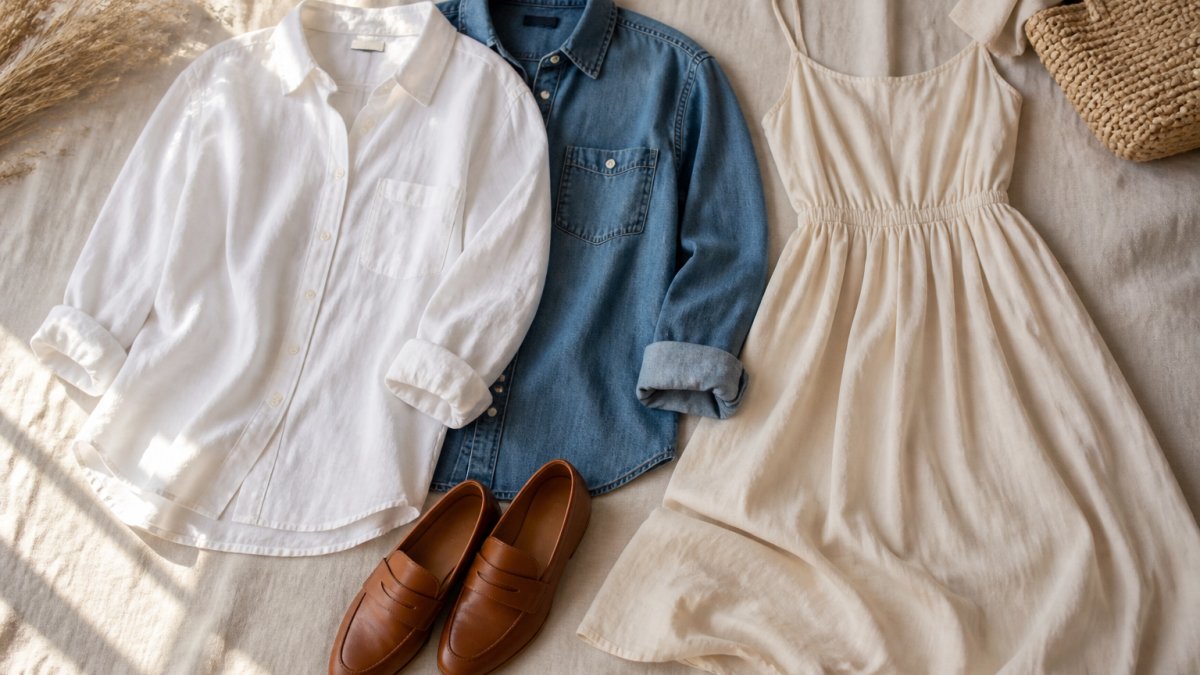
Core Neutral Pieces
Build your capsule around neutral colors: white, cream, gray, black, navy, and brown. Start with basics: white t-shirts, neutral sweaters, well-fitting jeans, and neutral trousers.
Layering and Versatility
Layering extends your capsule's reach. A lightweight sweater over a shirt creates a different look. Cardigans layer easily and work across seasons.
How to Care for Clothes to Make Them Last Longer
How you care for clothing determines its lifespan more than almost anything else. Proper washing, storage, and repair extend garment life dramatically, sometimes doubling or tripling how long a piece lasts.
Washing and Storage Best Practices
Wash less frequently, every wash weakens fibers and causes fading. Spot-clean stains instead. Most items need washing only every three to five wears.
Repair and Mending to Extend Garment Life
Learning basic mending skills saves garments that would otherwise be discarded. A loose button, small tear, or separated seam doesn't require professional repair.
Basic mending techniques:
-
Loose buttons: Thread a needle, anchor it with a knot, and sew through the button holes four to six times. Wrap thread around the stitches beneath the button to create a shank, then knot off on the back.
-
Small tears in seams: Use a needle and matching thread to stitch the seam closed with small, even stitches. Backstitch for strength. For larger tears, consider a patch on the inside.
-
Holes in fabric: Small holes can be patched. Cut a patch from similar fabric, fold edges under, and stitch it over the hole. For visible areas, consider a decorative patch that adds style.
-
Pilling: Use a fabric shaver or gentle brushing to remove pills. This restores appearance without damaging the garment.
-
Loose hems: Fold the hem back up and stitch with small, invisible stitches. Use thread matching the fabric color.
-
Stretched necklines: Sew elastic into the neckline seam to restore shape. This works for t-shirts and casual tops.
Shop Second-Hand and Vintage to Reduce Textile Waste
Second-hand shopping is one of the most sustainable choices you can make. It extends garment life, keeps clothing out of landfills, and often costs less than new items. Quality vintage pieces outlast modern fast fashion alternatives.
Ethical Shopping: Transparency and Greenwashing Awareness
Ethical consumption means understanding where your clothes come from and who makes them. Transparency in the supply chain is increasingly important, but greenwashing, false claims about sustainability, is common.
Spotting Greenwashing and Supply Chain Transparency
Greenwashing occurs when brands claim sustainability without backing it up. Watch for vague language: "eco-friendly," "natural," or "sustainable" without specifics. Real sustainability includes concrete details: organic certification, fair trade verification, or transparent factory locations.
How to Build a Sustainable Wardrobe on Your Budget
Sustainable fashion doesn't require unlimited spending. Strategic choices and patience let you build a quality wardrobe affordably.
End-of-Life Garment Management: What Happens When Clothes Wear Out
Eventually, even well-made clothes reach the end of their wearable life. How you dispose of them matters environmentally.
Frequently Asked Questions
What is the 5-4-3-2-1 method for building a sustainable wardrobe?
The 5-4-3-2-1 method is a capsule wardrobe framework: 5 neutral bottoms, 4 neutral tops, 3 patterned pieces, 2 jackets, and 1 pair of shoes as your foundation. This creates a small, versatile collection where most pieces coordinate, reducing decision fatigue and encouraging cost-per-wear calculations. Start with quality basics like a cotton linen shirt or denim long sleeve shirt, then build outward with complementary pieces.
How can I start building a sustainable wardrobe on a budget?
Begin by auditing what you already own and identifying gaps. Shop second-hand and vintage first for investment pieces and unique finds. Prioritise natural fibres and quality construction over quantity. Invest in a few timeless basics from trusted sources, like the Eco-Chic Leather Loafers or a classic denim shirt, that will last years. Calculate cost-per-wear: a $85 pair of loafers worn 200 times costs 43 cents per wear, making it genuinely affordable long-term.
What are the best fabrics for a sustainable wardrobe?
Natural fibres are most durable and biodegradable: organic cotton, linen, and hemp resist microplastic shedding and last longer than synthetics. Look for garments made from these materials, the Men's Casual Cotton Linen Shirt combines breathability with longevity. Avoid polyester-heavy blends unless necessary for stretch. Check fibre content on labels; 100% natural or high-percentage natural blends indicate better quality and environmental impact.
How do I identify high-quality, durable clothing?
Examine seams closely: they should be straight, even, and tightly stitched with no gaps or loose threads. Check hems and cuffs for neat finishing. Feel the fabric weight and thickness, quality garments have substantial, densely woven material. Look at buttons and zippers; they should be secure and functional. Read care labels for natural fibre content. Brands that detail construction methods and materials (like our Eco-Chic Loafers with their padded footbed and rubber outsole) signal quality investment.
Is it true that 85% of all textiles go to dumps each year?
Approximately 85% of all textiles produced globally end up in landfills annually. This represents roughly 92 million tonnes of waste. Building a sustainable wardrobe directly combats this by choosing durable pieces, extending garment lifespan through care and repair, and shopping second-hand. When you invest in quality clothing that lasts years rather than seasons, you reduce your contribution to textile waste and lower your fashion-related carbon footprint significantly.
What's the difference between ethical and sustainable fashion?
Ethical fashion focuses on fair labour practices, worker safety, and supply chain transparency, ensuring people are paid fairly and work in safe conditions. Sustainable fashion prioritises environmental impact: reducing waste, using natural fibres, minimising water use, and lowering carbon emissions. The best brands address both. When shopping, look for transparency about where and how clothes are made, certifications like Fair Trade, and evidence of supply chain accountability.
How do I spot greenwashing in fashion brands?
Greenwashing happens when brands make vague environmental claims without proof. Watch for red flags: generic terms like 'eco-friendly' without certification, no supply chain details, or claims about sustainability without third-party verification. Legitimate brands provide specific information: exact materials used, production locations, certifications (Fair Trade, GOTS for organic cotton), and transparent impact reports. If a brand can't answer 'where is this made?' or 'what's the fibre content?', question their sustainability claims.
What should I do with clothes that are beyond repair?
Before discarding, explore options: donate to charity shops or textile recycling programs, sell on second-hand platforms, or swap with friends. If genuinely unusable, check for textile recycling facilities in your area, many councils offer collection services. Some brands accept worn items for recycling. As a last resort, use damaged natural-fibre garments as cleaning rags. Avoid landfill by researching local textile waste streams. This circular approach keeps textiles in use longer and reduces the 92 million tonnes entering dumps annually.