

Table of Contents
- Core Wardrobe Staples Every Office Needs
- Business Casual Wardrobe Checklist
- How to Choose High-Quality Work Clothes
- Best Professional Footwear for Women
- Dressing for Different Office Dress Codes
- Essential Fabrics and Care for Professional Attire
- Seasonal Transitions and Inclusive Professional Style
- Frequently Asked Questions
Last Updated: October 1, 2026
Core Wardrobe Staples Every Office Needs
A professional office attire essentials list starts with about ten office attire essentials that mix and match across a full work week.
The core pieces are:
- Two blazers: one navy, one charcoal
- Three button-down shirts in white, light blue, and stripe
- Two pairs of tailored trousers
- One pencil skirt or dark suit bottom
- One pair of loafers or oxfords
- One structured tote
That's it. Ten pieces, dozens of combinations.
A capsule wardrobe is a small set of clothing items that all work together, so you can build many outfits from few pieces. It saves time, money, and closet space.
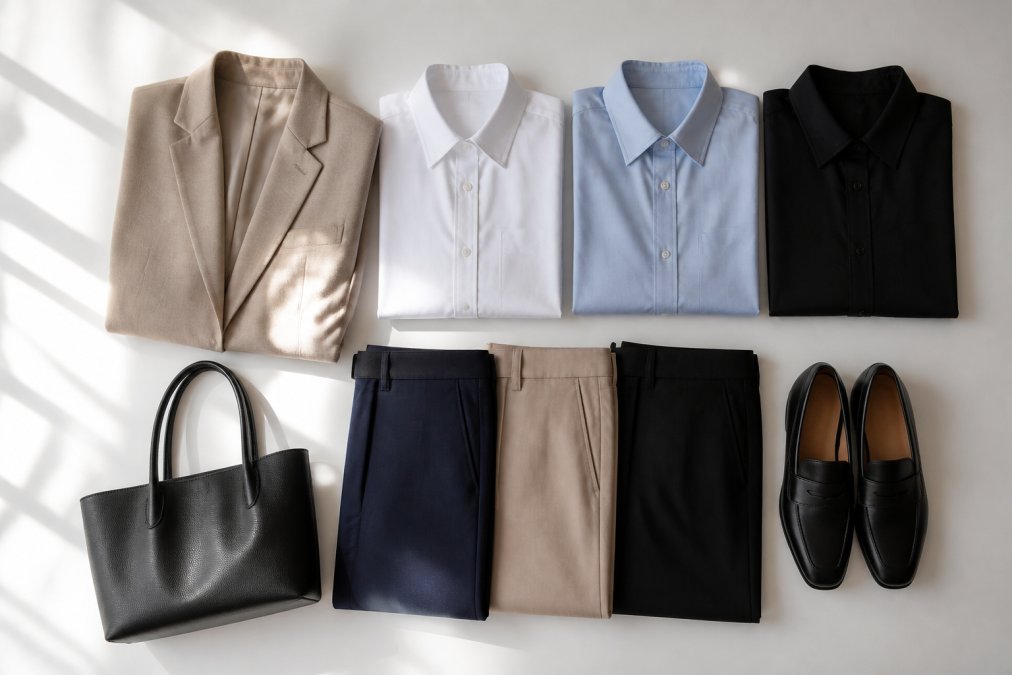
Start with the blazer. A structured shoulder and a clean line make the biggest difference to how formal you look. Pick wool blends over thin synthetics. They hold their shape longer.
Business Casual Wardrobe Checklist
A business casual wardrobe checklist covers smart separates that sit between jeans and a full suit. The goal is polished but relaxed.
Use this list to audit what you own:
- Two blazers in neutral colors
- Three button-down shirts
- Two fine-knit sweaters
- Two pairs of tailored trousers
- One dark pair of dark jeans without rips
- One midi or pencil skirt
- One pair of loafers
- One pair of clean white sneakers
- One structured bag
- One belt that matches your shoes
A common mistake is treating business casual as "anything goes." It doesn't. Skip graphic tees, ripped denim, and athletic shoes with visible logos.
Layering pieces do the heavy lifting here. A cardigan over a button-down reads more put-together than either piece alone.
How to Choose High-Quality Work Clothes
How to choose high-quality work clothes comes down to three checks: fabric, seams, and fit. Do all three before you buy.
First, read the label. Wool, cotton, linen, and silk breathe and last. Polyester blends resist wrinkles but pill faster. A small amount of stretch helps, but too much means the garment loses shape.
Second, turn the piece inside out. Look for:
- Clean, tight seams with no loose threads
- A lined blazer with a full back panel
- Buttons sewn on with a shank, not flat
- A hem with enough fabric to let out
Third, check the fit. Fit and silhouette matter more than the brand on the tag. Shoulders should sit at your natural shoulder line. Sleeves should end at your wrist bone.
What most guides miss is textile durability. Rub the fabric between your fingers. If it feels thin or scratchy, it will pill or wear out within a few washes.
Best Professional Footwear for Women
The best professional footwear for women balances comfort, durability, and polish. For most offices, that means a low block heel, a loafer, or a clean oxford.
Here's how the main options compare:
| Style | Best For | Comfort Level | Formality |
|---|---|---|---|
| Loafers | All-day wear | High | Business casual |
| Block heels | Meetings, presentations | Medium | Business formal |
| Oxfords | Suits and trousers | High | Business formal |
| Ballet flats | Commuting | Medium | Business casual |
| Ankle boots | Fall and winter | Medium | Smart casual |
Leather outsoles last longer than synthetic ones, and they can be resoled. Look for a cushioned insole and a heel under 5 cm if you stand a lot.
One customer put it simply: "Good boots, comfortable, quite light, and nice looking." That mix of comfort and style is exactly what to aim for.
Break new shoes in at home first. Wear them for an hour, then two. Your feet will thank you on the first real workday.
Dressing for Different Office Dress Codes
Every corporate dress code falls into one of four buckets, and knowing which one applies to you saves a lot of guessing, and a lot of money spent on clothes you'll never wear.
Here's the full breakdown, with concrete garment examples for each level:
- Business formal: A matched suit (jacket and trousers or skirt in the same fabric), a collared shirt, and a tie for men or a blouse for women. Closed-toe leather shoes, oxfords, derbies, or low pumps. Colors stay in navy, charcoal, black, and gray. Think law firms, investment banks, and some government offices.
- Business casual: A blazer over a button-down or fine-knit sweater, tailored trousers or a pencil skirt, and loafers or low heels. No tie required. This is the most common code in corporate offices, and the one most people get wrong by drifting too casual.
- Smart casual: Dark, unripped jeans are acceptable. Pair them with a blazer or a structured cardigan, a clean shirt, and leather sneakers or loafers. The polish comes from fit and fabric, not from formality.
- Casual: Jeans and tees are fine, but "casual" still means neat, no rips, no graphics, no athletic wear unless the office explicitly allows it.
A common pattern is that the label on the job posting doesn't match the reality of the office. A "business casual" label at one company means blazers and trousers; at another, it means jeans and a polo. Watch what senior staff wear in your first week and match that level, not the label.
Workplace etiquette matters here too. When in doubt, dress one notch above your daily norm. It's easier to dress down than to dress up, and the person who is slightly overdressed reads as more competent, not less.
One more layer: dress codes shift by industry. Tech and creative offices tend toward smart casual or casual. Finance, law, and consulting tend toward business formal or business casual. Healthcare and education often have their own hybrid codes, business casual with practical footwear, for example. Knowing your industry's default saves you from over- or under-dressing on day one.
Essential Fabrics and Care for Professional Attire
Fabric choice decides how long your work clothes last and how good they look after a long day. Breathable fabrics like cotton, wool, and linen keep you comfortable. Wrinkle-resistant blends save time on ironing.
Here's a quick guide:
- Wool: Warm, holds shape, great for blazers and trousers
- Cotton: Breathable, easy to clean, ideal for shirts
- Linen: Cool in summer, wrinkles easily
- Silk: Light and elegant, needs gentle care
- Polyester blends: Durable, wrinkle-resistant, less breathable
Garment care is where most people cut corners. A few habits protect your investment:
- Air out blazers after each wear before hanging them
- Wash button-downs inside out on a cool cycle
- Store shoes with shoe trees to hold their shape
- Steam instead of ironing wool and silk
For more on fabric standards and care labels, the US Federal Trade Commission textile rules explain what those care tags actually mean.
Seasonal Transitions and Inclusive Professional Style
Building a work wardrobe that works year-round comes down to layering. The same core pieces carry you from January to July with a few swaps, and the key is to think in layers rather than in separate seasonal wardrobes.
In winter, add a wool coat, a fine-knit sweater, and opaque tights. Swap lightweight trousers for wool-blend ones. In summer, switch to linen or cotton shirts, lighter trousers, and open-toe shoes if your office allows them. Layering pieces, a cardigan, a blazer, a lightweight scarf, shift an outfit from summer to fall in seconds.
A practical rule: for every season, you need one outer layer, one mid layer, and one base layer that all work together. That's three pieces per season, not a whole new wardrobe.
Now for the part most guides skip entirely: inclusive sizing and accessibility.
Look for these features when shopping:
- Elastic side panels in trousers, hidden under a clean waistband line
- Stretch waistbands that don't bunch or gap
- Magnetic closures instead of small buttons for anyone with dexterity limitations
- Adjustable hems for different heights, or a tailor who can shorten without losing the drape
- Seated-fit trousers with a higher back rise for wheelchair users
- Wrap tops and dresses that adjust across a range of sizes
Frequently Asked Questions
What are the essentials for professional office attire?
Start with a neutral blazer, two button-down shirts, tailored trousers, a pencil skirt, and closed-toe shoes like loafers or oxfords. Add layering pieces such as a fine-knit sweater and a structured tote. These office attire essentials cover most business casual and business formal settings, and you can expand with seasonal items as needed.
How do I build a business casual wardrobe checklist on a budget?
Focus on versatile neutral colors and investment pieces you can mix and match. Build your business casual wardrobe checklist around five tops, three bottoms, two blazers, and two pairs of shoes. Choose wrinkle-resistant, breathable fabrics that hold up to frequent wear. Shopping curated online stores like MANDOTOS can help you find quality pieces without overspending.
What is considered business professional vs. business casual?
Business professional typically means a suit, tailored dress, or blazer with dress trousers or a pencil skirt, paired with closed-toe leather shoes. Business casual is more relaxed: button-down shirts, smart blouses, chinos, and loafers or clean sneakers. The key difference is structure and formality. Always check your specific corporate dress code, as expectations vary by industry and region.
How can I choose high-quality work clothes that last?
Check fabric quality by looking for natural fibers like cotton, wool, or silk blends with a tight weave. Inspect stitching, buttons, and lining for durability. Prioritize fit and silhouette, and budget for tailoring or hemming if needed. Reading customer reviews about textile durability can also guide you. When you choose high-quality work clothes, you reduce replacement costs and maintain a professional aesthetic over time.
Building a work wardrobe that lasts takes planning, not luck. MANDOTOS helps you get there with globally curated collections, a focus on durability, and free shipping in the US on orders over $50. You can also earn discounts and freebies through referrals, so upgrading your office look pays you back. Get started with MANDOTOS and build a wardrobe that works as hard as you do.