

Last Updated: October 25, 2026
Quick Summary
Clean white leather sneakers safely by brushing off loose dirt first, then wiping with a barely damp cloth and a pH-neutral leather cleaner, and never soaking the leather. Test any cleaner on a hidden spot for 10-15 minutes before use, and air-dry away from heat and sunlight.
- Remove laces and insoles, then brush off loose dirt before any water touches the shoe.
- Test cleaner on a hidden spot and wait 10-15 minutes for color, tackiness, or dulling.
- Wipe with a damp, wrung-out cloth in small circles and buff dry with a clean cloth.
- Air-dry at room temperature with crumpled paper, away from radiators and sunlight.
- Wipe shoes after every wear and reapply conditioner or protective spray monthly.
Table of Contents
- Why White Leather Sneakers Need a Measured Cleaning Process
- What You'll Need Before You Start
- The Best Cleaner for White Leather Sneakers
- Step-by-Step: Wiping, Rinsing and Cleaning the Upper
- How to Remove Scuffs from White Leather Shoes
- How to Dry White Leather Sneakers Without Cracking
- How to Keep White Leather Sneakers White
- Choosing Your Next Pair of White Leather Sneakers
- Frequently Asked Questions
Why White Leather Sneakers Need a Measured Cleaning Process
White leather sneakers look sharp until they don't. One muddy puddle, one scuffed toe, and the crisp finish that sold you on the pair starts to fade.
Harsh brushing, soaking, and hot water all break down the leather's surface. A measured process protects the material while it lifts the dirt.
Learning how to clean white leather sneakers without damaging material comes down to three rules: remove loose dirt first, use the gentlest cleaner that works, and never soak the leather. Follow those, and a white pair stays white far longer.
Below, we'll walk through each step in order, from prep to drying to long-term care.
What You'll Need Before You Start
Gather your tools before you touch the shoes. Stopping mid-clean to hunt for a brush wastes time and tempts you to improvise with something too harsh.
Here's your kit:
- A soft-bristle brush or an old toothbrush
- A microfiber cloth or soft cotton rag
- A small bowl of lukewarm water
Skip stiff brushes, scouring pads, and bleach-based products. They scratch the finish and strip the white coating.
Removing Laces and Insoles
Take the laces out first. They trap grit that grinds into the leather while you clean. Wash them separately in warm soapy water, rinse, and let them air-dry.
Pull the insoles out too. This lets air reach the inside of the shoe and stops moisture from getting trapped under your feet. If your insoles are worn flat, a fresh pair of heel pads and cushion inserts can refresh the fit while the shoes dry.
Brushing Away Loose Dirt and Dust
Start dry. Before any water touches the shoe, brush off the surface dirt, dust, and loose grit with your soft brush.
Work in small circles over the whole upper. Pay attention to the seams and the area where the upper meets the sole, since grit collects there.
This dry pass matters more than people think. Wetting loose dirt turns it into a muddy paste that works deeper into the grain.
The Best Cleaner for White Leather Sneakers
The best cleaner for white leather sneakers is a pH-neutral leather cleaner made for smooth leather. It lifts dirt without stripping the finish or leaving a chalky residue. But "best" depends on the finish, and the only way to know a product is safe on your pair is to test it first.
Avoid anything labeled for suede, nubuck, or canvas. Those formulas target different materials and can dry out or discolor smooth leather.
Matching the Cleaner to Your Leather Finish
Not all white leather is the same. Check the finish before you pick a product.
| Leather finish | What it looks like | Cleaning approach | What to avoid |
|---|---|---|---|
| Smooth, coated | Glossy, even surface | Damp cloth plus pH-neutral cleaner | Abrasive brushes, solvent cleaners |
| Pebbled | Visible grain texture | Soft brush, light pressure, work with the grain | Scrubbing across the grain, soaking |
| Patent or high-shine | Very glossy, reflective | Damp cloth only, no brushing | Any brush, cream cleaners, alcohol |
| Delicate or unfinished | Soft, matte, slightly porous | Leather-specific cleaner, minimal water | Household soaps, vinegar, baking soda |
| Suede or nubuck | Matte, velvety feel | Not leather cleaner; use a suede brush and eraser | Water, leather cleaners, brushing |
If you're unsure which finish you have, test any cleaner on a hidden spot first, like the inside of the heel or under the tongue.
How to Run a Test Patch (and What to Do If It Fails)
A test patch takes two minutes and prevents the most common cleaning disasters. Apply a small amount of cleaner to a hidden area with a cotton swab. Wait 10-15 minutes, then check for three things: color change, tackiness, and finish dulling.
- If the patch darkens or lightens: the cleaner is too strong for that finish. Stop and switch to plain lukewarm water on a barely damp cloth.
- If the patch feels sticky or tacky: the product is leaving residue. Wipe with a clean damp cloth and buff dry; do not proceed with that cleaner.
- If the finish looks dull or chalky: the cleaner is stripping the coating. Rinse the patch with water and use a leather conditioner sparingly after drying.
A common pattern is that damage shows up minutes after application, not immediately, so wait the full test window before cleaning the whole shoe.
Household Alternatives vs Purpose-Made Cleaners
A purpose-made leather cleaner is the safest bet. It's formulated to protect the finish and rinse clean. Household options can work in a pinch, but only some are leather-safe:
- Mild dish soap: a tiny drop in lukewarm water, well diluted, safe for most coated leathers
- Baking soda paste: for tough spots, applied sparingly and rinsed fully, can leave residue if not removed
- White vinegar: diluted, for light marks only, do not use on patent or delicate finishes
When in doubt, a leather-specific cleaner is cheaper than replacing a damaged pair.
Kimmy White LED Sneakers Shoes →
Step-by-Step: Wiping, Rinsing and Cleaning the Upper
Cleaning the upper is where most damage happens. The goal is to lift dirt with gentle, controlled motions, not to scrub the surface raw.
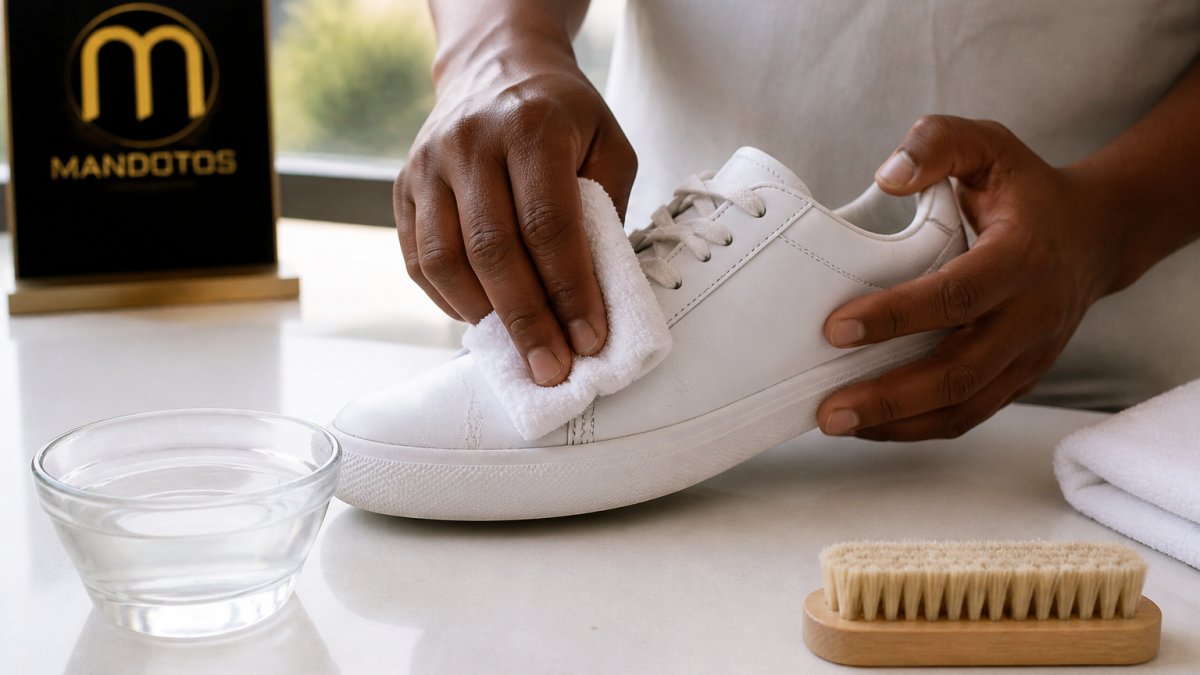
Follow these steps:
- Dampen your cloth. Wring it out so it's barely wet, never dripping.
- Wipe in small circles. Use light pressure across the upper. Don't press hard.
- Dip and repeat. Rinse the cloth often so you're not spreading dirt around.
- Clean the seams last. A soft brush helps here, used gently.
- Buff dry. Wipe away residue with a clean, dry cloth.
The key rule: a damp cloth, not a soaked one. Water that sits on leather breaks down the finish over time.
How to Remove Scuffs from White Leather Shoes
Scuffs respond to a light touch and the right tool. Most white marks on leather come off with a soft eraser or a dab of cleaner, not aggressive rubbing.
Try these in order, from gentlest to strongest:
- A pencil eraser: rub lightly on dry scuffs
- A damp cloth with mild soap: for smudges
- A tiny bit of baking soda paste: for stubborn marks
Work on one small area at a time. Rinse and buff after each attempt. If a scuff won't budge after two gentle tries, stop. More rubbing wears the finish thinner than the mark itself.
Stain-by-Stain: What Actually Works
General advice fails on specific marks. Use this guide to match the method to the stain.
| Stain type | First move | If it persists | Avoid |
|---|---|---|---|
| Mud | Let it dry fully, then brush off | Damp cloth with mild soap | Wiping wet mud into the grain |
| Grease or oil | Blot with a dry cloth, apply cornstarch, wait 15-30 min, brush off | Leather-safe degreaser | Water first, it spreads the oil |
| Ink | Dab with a cotton swab dipped in leather-safe cleaner | Repeat in small dabs, never rub | Alcohol, acetone, scrubbing |
| Salt stains | Wipe with a cloth dampened with diluted white vinegar (coated leather only) | Damp cloth with mild soap | Soaking, vinegar on patent or delicate leather |
| Scuffs | Pencil eraser, light pressure | Damp cloth with mild soap | Abrasive pads, hard rubbing |
| Yellowing | Damp cloth with mild soap, air-dry away from sun | Leather conditioner after drying | Bleach, heat drying |
For grease, the cornstarch step matters more than the cleaner. Give it the full 15-30 minutes to pull oil out of the grain before you introduce any moisture.
Damage Prevention While Spot-Cleaning
Spot-cleaning is where most finish damage happens because people over-apply product and over-rub. Keep these rules in mind:
- Use the least amount of cleaner that works. A pea-sized dab is usually enough for a single scuff.
- Work from the outside of the stain inward. This stops the mark from spreading.
- Rinse and buff after every attempt. Residue left on the surface attracts dirt and dulls the finish.
A common pattern is that the mark itself does less damage than the attempt to remove it. Patience protects the finish.
How to Dry White Leather Sneakers Without Cracking
Air-dry white leather sneakers at room temperature, away from direct sunlight and heat. Fast drying pulls moisture out too quickly and cracks the leather.
Stuff the shoes with crumpled paper or shoe trees to hold their shape. Change the paper if it gets damp.
Keep them away from radiators, hairdryers, and sunny windowsills. Heat speeds drying but ruins the material. Patience here protects the pair.
How to Keep White Leather Sneakers White
Keeping white leather sneakers white is about small habits, not deep cleans. A quick wipe after each wear stops dirt from setting in.
Build these into your routine:
- Wipe down after every wear with a dry cloth
- Spot-clean marks the day you notice them
- Reapply a leather conditioner or protective spray monthly
Conditioning matters more than people realize. It keeps the leather supple and creates a barrier against stains. A little care each week saves a big cleaning job later.
Choosing Your Next Pair of White Leather Sneakers
Care only goes so far. If your current pair is cracking, yellowing, or worn through, it's time to replace them, and a well-made pair rewards the effort you put into cleaning.
When you shop, look for smooth, coated leather, a cushioned insole, and a non-slip rubber sole. Those details make a pair easier to clean and longer-lasting.
Our Leather Sneakers Casual Shoes come in white with cushioned support and a non-slip outsole. For a step up, the Luxe Leather Sneakers pair premium leather with all-day comfort. And if you want a sharper option, the Men's Chic Leather Sneakers add a polished finish to everyday wear.


Frequently Asked Questions
How do I get my white leather sneakers white again?
Start by removing laces and insoles, then brush off loose dirt with a soft brush. Wipe the upper with a damp cloth and a cleaner suited to your leather finish, working in gentle circular motions. Rinse the cloth and wipe away residue, then air-dry away from heat and direct sunlight. For yellowing or set-in discoloration, treat the area with a leather-safe cleaner and follow with a conditioner once dry.
What is the best cleaner for white leather sneakers?
A purpose-made leather cleaner is the safest choice because it is formulated to lift dirt without stripping the finish. Match it to your shoe: smooth leather tolerates a mild foaming cleaner, while suede and nubuck need a dedicated brush and dry method. Avoid harsh detergents and abrasive pads, which can dull the surface. Always test a small hidden area first and use gentle pressure rather than scrubbing hard.
How often should you clean white leather sneakers?
Wipe them down after each wear to remove surface dust, and do a fuller clean every two to four weeks depending on use. If you wear them daily in wet or dusty conditions, clean weekly. Regular brushing and prompt spot cleaning prevent dirt from working into the leather, which is the main cause of stubborn discoloration and worn-looking patches.
Can I use dish soap or a Magic Eraser on white leather shoes?
Dish soap can strip the leather's natural oils and leave residue, so it is best avoided on smooth leather. Magic Erasers are abrasive and can dull or scratch the finish, especially on white leather where damage shows quickly. A soft cloth, a soft brush and a leather-safe cleaner remove scuffs and stains without risking the surface.
