

Table of Contents
- Start With the Fabric: How to Check Fabric Quality Online
- Signs of Well-Made Clothing You Can See in a Listing
- How to Evaluate Clothing Reviews Without Getting Fooled
- Questions to Ask Before Buying Clothes Online
- Your Repeatable Online-Only Inspection Checklist
- Sizing, Returns, and Care: The Costs You Don't See Upfront
- Conclusion: Buy Less, Check More
- Frequently Asked Questions
Last Updated: October 12, 2026
Start With the Fabric: How to Check Fabric Quality Online
Learning how to spot high quality clothing online starts with one skill: reading the fabric composition before you look at a single photo. Fabric is the foundation of every garment. Get it wrong and no amount of clever styling will save the piece.

Read the Fiber Content, Not the Marketing Copy
Fiber content is the percentage breakdown of materials in a garment, listed on the label or product page. It tells you what the fabric actually is.
Look for a clear list like:
- 100% cotton
- 95% cotton, 5% elastane
- 70% wool, 30% polyester
Natural fibers like cotton, wool, linen, and silk behave differently from synthetics. Cotton breathes and washes well. Wool holds warmth and shape. Linen creases but lasts.
If a listing hides the fiber content, treat that as a red flag. You cannot judge a garment's durability, shrinkage, or pilling risk without it.
Weight, Drape, and Opacity in Product Photos
Fabric weight and drape are hard to fake in photos, but they're easy to misread. A few visual cues help.
- Opacity: Hold the idea of backlighting in mind. Can you see shadows through the fabric? Thin fabric shows it.
- Drape: Does the fabric fall in clean lines, or does it bunch and wrinkle oddly? Drape reveals structure.
- Texture: Zoom in. Can you see the weave? A visible, even weave usually signals better construction.
- Sheerness: If the model's skin tone shows through a "solid" color, expect the same in person.
Signs of Well-Made Clothing You Can See in a Listing
Stitching and finishing details separate a garment that lasts three years from one that lasts three washes. You can spot most of these signs without touching the item.
Stitching, Seam Finishes, and Interior Construction
Stitch density is the number of stitches per inch along a seam. Denser, even stitching holds better than sparse, uneven stitching. Look for close-up photos of seams.
Check for these quality indicators:
- Double stitching along stress points like shoulders and side seams
- French seams or overlocking that enclose raw edges
- Bar tacks at pocket corners and fly openings
- Clean seam allowance with no loose threads
Raw, fraying edges on the inside are a warning sign. So is a lining that hangs loose or pulls at the shoulders. Turn the garment inside out in your mind: if the listing shows no interior photos at all, ask for them.
Hardware, Closures, and Finishing Details
Zippers, buttons, and rivets take the most abuse. A metal zipper with smooth teeth and a sturdy pull outlasts a flimsy plastic one. Rivets at pocket corners stop fabric from tearing.
Small details signal overall workmanship. Aligned patterns at the seams, matched thread color, and a straight hem all point to a maker who cares. Misaligned plaid or crooked stitching points the other way.
How to Evaluate Clothing Reviews Without Getting Fooled
Reviews are the closest thing to touching a garment online, but only if you read them like a detective.
Start with the three-star reviews. They tend to be the most balanced, because the buyer liked something but found a flaw.
Then check these signals:
- Photos from buyers: Real photos beat studio shots every time. Look for photos taken in natural light, not just the seller's images. Pay attention to how the fabric drapes on different body types.
- Fit comments: "Runs small" or "true to size" patterns matter more than the star rating. If multiple reviewers say a garment runs large, size down. If they say it runs small, size up. Look for reviewers who share their height, weight, and usual size.
- Wear over time: Reviews written months after purchase carry more weight. A review that says "I've washed this five times and it still looks new" is gold. A review that says "loved it for a week, then it pilled" is a warning.
- Verified purchases: Prioritize buyers who actually received the item. Some platforms label these clearly. Unverified reviews can be incentivized or fake.
- Specific details: Reviews that mention fabric weight, seam quality, or hardware durability are more reliable than vague praise. "The zipper feels sturdy" beats "great quality."
Ignore reviews that only say "love it" with no detail. They add nothing.
A useful trick is to search within the reviews for keywords like "shrink," "pill," "fade," "seam," or "return." This quickly surfaces common problems. If you see a pattern of complaints about a specific issue, that's a red flag.
Finally, check the seller's responses to negative reviews.
Questions to Ask Before Buying Clothes Online
A short message to the seller can save you a return. Ask direct questions and expect direct answers.
Y2K Baggy Jeans Harajuku vintage Striped Embroidered high quality Sweatpants →
- What is the exact fiber content?
- Can you send a close-up of the inside seams?
- How does this garment fit compared to standard sizing?
- Does the fabric shrink or pill after washing?
- What is your return window and who pays return shipping?
Your Repeatable Online-Only Inspection Checklist
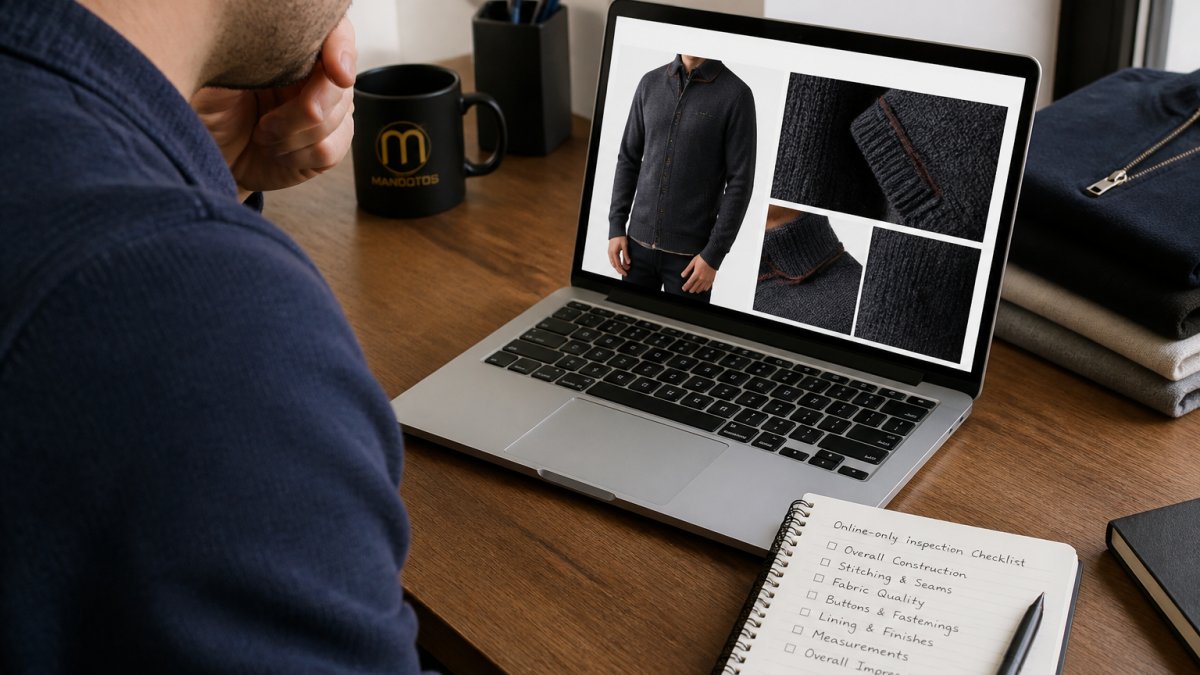
Use this checklist every time you shop. It takes about five minutes and catches most problems before you pay.
- Fiber content is listed with exact percentages
- Fabric weight and opacity are clear from photos
- Close-up photos show stitching and seam finishes
- Interior construction is visible or available on request
- Hardware (zipper, buttons, rivets) looks sturdy
- Size chart includes real measurements, not just S/M/L
- Reviews mention fit and wear over time
| Check | What to Look For | Red Flag |
|---|---|---|
| Fiber content | Exact percentages listed | "Premium blend" only |
| Stitching | Double stitched, even | Loose or sparse threads |
| Seams | French seams or overlocking | Raw, fraying edges |
| Hardware | Metal zipper, rivets | Flimsy plastic parts |
| Reviews | Fit and wear details | Only "love it" comments |
| Returns | Clear window and terms | Vague or missing policy |
Sizing, Returns, and Care: The Costs You Don't See Upfront
The listed price is rarely the full cost. Sizing uncertainty, return shipping, and care requirements all add up. A garment that doesn't fit or requires expensive cleaning can end up costing more than a slightly pricier piece that fits well and washes easily.
How to Use Size Charts Like a Pro
Check the size chart against your own measurements, not your usual letter size. Brands vary wildly, and a size chart with real numbers in centimeters or inches is far more reliable than a generic S/M/L guide.
Here's a repeatable process:
- Take your measurements. Use a soft measuring tape. Measure your bust or chest at the fullest point, your natural waist (the narrowest part of your torso), and your hips at the fullest point. For pants, also measure your inseam from crotch to ankle.
- Compare to the chart. Find the size where your measurements fall within the range. If you're between sizes, size up for woven fabrics (like denim or linen) and size down for knits that stretch.
- Check the model's measurements. Many listings state the model's height, weight, and the size they're wearing. If the model is 5'9" and wearing a small, and you're 5'2", the garment may fit differently on you. Look for fit notes like "model is wearing a size M" and compare to your own body.
- Look for garment measurements. Some listings provide flat measurements (e.g., chest width, length). Compare these to a similar garment you already own and love. This is more accurate than relying on body measurements alone.
If the size chart is missing or vague, ask the seller for exact measurements. A seller who can't provide them is a risk.
Returns and Warranties: Your Safety Net
Read the return policy before you buy, not after. A generous window with free returns lowers your risk. A short window with buyer-paid shipping raises it.
Look for these details:
- Return window: 30 days is standard; 14 days is tight. Some sellers offer extended returns during holidays.
- Who pays return shipping: Free returns mean you can try without risk. If you pay, factor that into the total cost.
- Condition requirements: Most policies require original tags and unworn condition. Some allow try-on but not wear.
- Restocking fees: Some sellers charge a percentage. Avoid these if possible.
- Warranties or repair policies: A few quality-focused brands offer repair services or lifetime guarantees. These reduce long-term cost.
Care Requirements and Cost Per Wear
Then read the care label. Hand-wash-only wool costs more over time than machine-washable cotton. Dry-clean-only garments carry ongoing expense.
To calculate cost per wear, estimate how many times you'll wear the garment and divide the total cost (including care) by that number.
Consider these care factors:
- Washing: Machine washable is easiest. Hand wash is time-consuming. Dry clean is expensive.
- Drying: Tumble dry low is convenient. Line dry takes space and time. Some fabrics shrink in the dryer.
- Ironing: Wrinkle-resistant fabrics save time. Linen and some cottons require ironing.
- Pilling and fading: Some fabrics pill or fade after a few washes. Reviews often mention this.
A garment that requires special care but lasts for years may still be worth it. A cheap garment that pills after two washes is not.
Conclusion: Buy Less, Check More
The hardest part of shopping online is trusting a photo you cannot touch. Slow down, read the fiber content, inspect the seams, and ask the seller direct questions. A few extra minutes now saves a return later.
Fashion, Footwear & Accessories curates pieces with the details that matter: clear fabric composition, durable construction, and honest product listings. Our collections span fashion, footwear, accessories, and gifts, with worldwide shipping and free US shipping on orders over $50.
Join now and shop pieces worth keeping.
Frequently Asked Questions
How can you tell if clothes are good quality when shopping online?
Start with the fabric composition listed in the product details. Natural fibers like cotton, wool, linen, and silk generally indicate better quality than synthetic blends. Look for close-up photos of stitching, seams, and hardware. Check whether the listing includes garment measurements and a detailed size chart. Read customer reviews that mention durability, pilling, or shrinkage after washing. If the seller answers questions about construction and care, that transparency is a positive sign for high quality clothing.
What should you look for in clothing product photos?
Zoom in on close-up photos that show fabric texture, stitch density, and seam finishes. Look for images of the garment turned inside out to reveal interior construction, raw edges, and lining. Check whether the photos show the item on different body types rather than only on models. Be cautious if all images are heavily filtered or only show the front of the garment. A listing that includes detailed photos of hems, bar tacks, and zipper tape gives you more to evaluate before buying.
Are customer reviews reliable for judging clothing quality?
Reviews are useful when you read them critically. Focus on reviewers who mention specific details like fabric weight, fit after washing, or how the garment held up over months. Look for patterns across multiple reviews rather than trusting a single five-star rating. Be wary of reviews that only say 'great quality' with no detail, or that all appear within a short time frame. Reviews mentioning shrinkage, colorfastness issues, or seam problems are especially valuable for spotting red flags.
What should you check in a clothing return policy before buying?
Confirm the return window, who pays return shipping, and whether the item must be unworn with tags attached. Check if the seller accepts returns for fit issues versus only for defective items. Look for restocking fees or final-sale exclusions. A clear, generous return policy reduces the risk of buying high quality clothing online when you cannot try it on first. If the policy is vague or buried, treat that as a warning sign about the seller's confidence in their products.