

Table of Contents
- How to Verify Online Product Quality: A Step-by-Step Approach
- Step 1: Assess Seller Credibility and Supplier Reputation
- Step 2: How to Evaluate Online Product Reviews for Reliability
- Step 3: Inspect Product Details, Photos, and Descriptions
- Step 4: How to Verify Product Authenticity Online
- Step 5: Online Shopping Product Quality Checklist for Clothing and Footwear
- Step 6: How to Assess Clothing Quality Online Before Purchase
- What to Do If a Product Fails Quality Verification After Delivery
- Frequently Asked Questions
Last Updated: October 16, 2026
How to Verify Online Product Quality: A Step-by-Step Approach
Buying online means you can't touch or inspect items before purchase, so you rely on photos, descriptions, and seller information.
Verify online product quality by checking the seller first, reading reviews carefully, inspecting product details, confirming authenticity, and knowing what to do if something arrives damaged or substandard.
The stakes are real: a garment that falls apart after three washes wastes money, and unsafe baby items put children at risk.
Step 1: Assess Seller Credibility and Supplier Reputation
Your first line of defense is the seller. A trustworthy seller sources quality products and stands behind them; a questionable one cuts corners or disappears when problems arise.
Check company information and legal details
Look for:
- Full legal business name and registration number
- Physical mailing address (not just a P.O. box)
- Contact phone number and email
- "About Us" page with company history and mission
- Founder or leadership information
If a seller hides their identity or provides vague information, that's a red flag.
Check how long they've been operating, then search the company name with terms like "reviews," "complaints," or "scam." Patterns matter more than individual comments.
Verify website security and trust signals
Before entering payment information, confirm the site is secure. Look for HTTPS in the URL, a padlock icon, trust badges from verified security companies, a clear return and refund policy, and a privacy policy explaining how they handle your data. A secure website encrypts your payment information, protecting you from hackers. Also check social media presence: real businesses maintain active accounts and respond to customers; scammers rarely do.
Step 2: How to Evaluate Online Product Reviews for Reliability
Reviews are powerful, but not all are honest, some are fake, others come from people with different standards.
Distinguish verified purchases from unverified claims
The most reliable reviews come from people who actually bought and used the product. Look for a "verified purchase" badge next to the reviewer's name. Mostly verified five-star reviews with a few unverified one-star reviews is normal; many unverified low ratings with few verified high ones is suspicious.
Trustworthy review says: "These boots fit true to size, the leather is soft but durable, and after six months of daily wear they still look new."
Suspicious review says: "Great product, highly recommend!"
Real customers mention specifics like fit, durability, materials, and how long they've used the item.
Identify patterns in ratings and watch for suspicious reviews
Look at the rating distribution, not just the average. Mostly four- and five-star reviews with a few one- and two-star reviews is normal.
Watch for suspicious patterns:
- All five-star reviews with identical language ("This product is amazing! I love it!")
- Sudden spike in reviews over a short period
- Reviews that praise the seller rather than describe the product
- Reviews from accounts with no other purchase history
- Reviewers who post identical reviews for multiple products
These patterns suggest fake reviews. Read the lowest-rated reviews carefully: if multiple people mention the same issue, seams coming undone, sizing running small, color fading, that's a genuine concern, not an outlier. Check review dates too; if ratings dropped from five stars to two over time, quality may have declined.
Step 3: Inspect Product Details, Photos, and Descriptions
Photos and descriptions are your window into product quality. High-quality sellers invest in professional photography and detailed specifications; low-quality sellers use blurry photos and vague descriptions.
Read specifications carefully and compare against market price
Specifications tell you what you're actually getting. Read them completely before assuming anything.
For clothing, check:
- Materials and fabric composition (100% cotton vs. cotton blend)
- Care instructions (machine wash vs. dry clean only)
- Sizing chart with actual measurements
- Weight and thickness information
- Color accuracy notes
For footwear, look for:
- Sole material (rubber, leather, synthetic)
- Heel height and width options
- Arch support details
- Break-in period information
- Recommended use (casual, formal, athletic)
Compare the price to similar items. If a product costs significantly less than competitors, ask why, it might mean genuine value, or lower quality, older inventory, or a clearance sale. Use price comparison tools to check what similar products cost elsewhere; a significant difference should make you investigate.
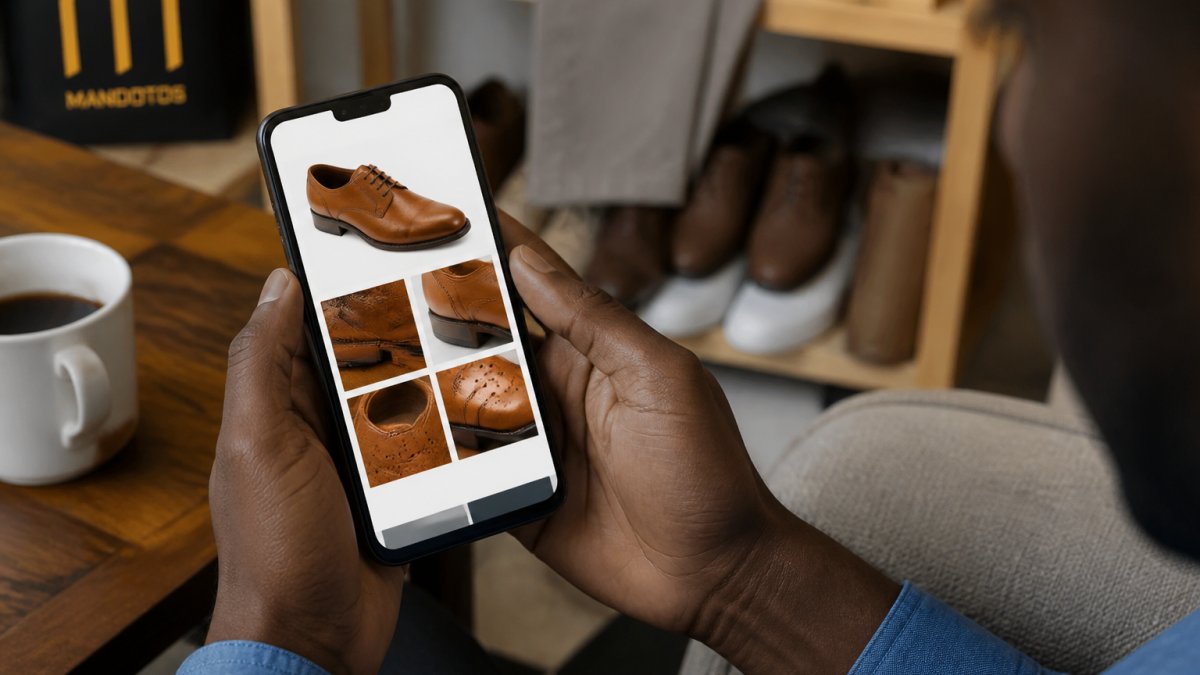
Examine product images for signs of quality and authenticity
Professional product photos reveal quality. Blurry, poorly lit, or few photos suggest the seller doesn't care about presentation.
Good product photos show:
- Multiple angles (front, back, sides)
- Close-ups of details like seams, stitching, and zippers
- Product worn or used (not just laid flat)
- Color accuracy under different lighting
- Scale reference (item next to a coin or hand)
Examine seams for even stitching, zippers for smooth operation, and edges and hems for neat finishing. Uneven stitching, loose threads, or rough edges indicate poor craftsmanship.
Check if the product appears in multiple listings, counterfeit sellers steal photos from legitimate retailers. Reverse image search on Google can reveal if a photo appears elsewhere online.
Notice the lighting. Professional retailers use consistent, bright lighting that shows true colors; dim or yellow lighting hides flaws.
Step 4: How to Verify Product Authenticity Online
Counterfeits exist for high-demand items. Spotting fakes protects you from wasting money on knockoffs.
Check for certificates, licenses, and barcodes
Legitimate products often come with proof of authenticity. Look for:
- Certification labels (organic, fair trade, safety certifications)
- License numbers or registration codes
- Serial numbers that can be verified
- Barcodes that match product databases
- Holograms or security features
If a product claims to be certified, verify it: search the certification number on the official certifying organization's website, or use the brand's authentication tool to confirm the product code is genuine.
Check the packaging in photos. Legitimate brands use clear printing, proper spelling, and accurate logos; counterfeit packaging often has spelling errors, blurry printing, or slightly off logos.
Identify counterfeit and duplicate product red flags
Red flags include:
- Price far below market value
- Seller located in a country known for counterfeits
- Product description contains poor spelling or grammar
- Photos appear stolen from other listings
- Seller has no verifiable business history
- Product comes in unmarked or plain packaging
- Serial numbers don't match official databases
- Logos or branding look slightly wrong
Compare the product to official images from the brand's website; subtle differences in logo placement, font, or color indicate a fake. Be especially cautious with high-demand luxury items, designer goods, and electronics, these attract counterfeiters because they command high prices. If a deal seems too good to be true, it probably is.
Step 5: Online Shopping Product Quality Checklist for Clothing and Footwear
Clothing and footwear require specific quality checks: they must fit properly, feel comfortable, and hold up to regular use.
Materials and build quality indicators
Check fabric composition:
- Natural fibers (cotton, wool, silk) vs. synthetics
- Blend percentages (higher natural fiber percentage usually means better quality)
- Weight and density (heavier isn't always better, but thin fabrics feel cheap)
- Stretch and recovery (fabric should return to shape after stretching)
For footwear, evaluate:
- Sole attachment method (glued vs. stitched; stitched is more durable)
- Insole quality and arch support
- Heel stability and wear resistance
- Upper material durability and water resistance
Look at construction details in photos. Hand-stitched seams indicate craftsmanship; even, tight machine stitching suggests quality control; loose, uneven, or missing stitches indicate poor manufacturing.
Check for reinforced stress points. Quality clothing has reinforced seams at underarms and between legs. Quality footwear has reinforced heel counters and toe boxes.
Fit, sizing, and durability signals
Fit problems are the top reason for returns, so understand sizing before you buy. Review the sizing chart and compare it to items you already own, lay a garment you love flat, measure it, and compare those measurements to the product's chart. Read reviews about fit; comments like "runs small" or "fits generous" are valuable since some brands consistently size differently. Check the return policy too: a generous return window with free returns gives you safety, while a seller who won't accept returns is a risk.
Step 6: How to Assess Clothing Quality Online Before Purchase
Assessing clothing quality from photos takes practice. You're looking for signs of craftsmanship and durability.
Evaluate seams, stitching, and craftsmanship from photos
Seams are the foundation of garment durability. Poor seams fail quickly. Good seams last.
In product photos, look for:
- Straight, even stitching lines
- Consistent stitch length throughout
- Reinforced seams at stress points (shoulders, crotch, underarms)
- Flat, smooth seams (not puckered or wavy)
- Finished seam edges (not raw or fraying)
- Double stitching on critical seams
Examine hems closely: quality hems are even and narrow, while sloppy hems indicate rushed manufacturing. Check collar and cuff construction, since these areas get heavy use, quality collars are reinforced and interfaced, and cuffs should be sewn firmly with no gaps or puckering. Look at pattern alignment: quality garments match patterns at seams on striped or patterned fabrics, and misalignment indicates the manufacturer didn't care about precision.
Check return and refund policies for protection
A good return policy protects you if quality falls short, so understand the terms before buying.
Look for:
- Clear return window (30 days minimum is standard)
- Free return shipping (or prepaid label)
- Full refund or store credit options
- No restocking fees
- Simple return process
A seller confident in quality displays return policies prominently and makes returns easy; complicated, restrictive policies suggest the seller knows quality is questionable. Check whether the seller accepts returns for quality issues specifically, and read what other customers say about returns, easy refunds and quick processing suggest a trustworthy seller.
What to Do If a Product Fails Quality Verification After Delivery
Sometimes a product arrives and falls short of expectations despite great photos and positive reviews.
Document the problem immediately with timestamped photos or videos showing the defect, close-ups of failing seams, stains, color issues, or damage. Contact the seller right away, since most have time limits for reporting problems, and send a professional message with your photos: "The left seam is coming apart for three inches" beats "quality is poor." Reference their return policy, state that you're requesting a return under it, and include your order number and purchase date.
Frequently Asked Questions
How can I check if an online seller is trustworthy before buying?
Start by verifying the seller's company information, legal address, and social media presence. Check for HTTPS and a padlock icon on their website to confirm security. Read customer reviews on independent platforms, not just their own site. Look for a clear return policy, refund policy, and buyer protection guarantees. Sellers with transparent contact details and established track records are more reliable than new or anonymous accounts.
Can I trust product reviews when shopping online?
Not all reviews carry equal weight. Prioritize verified purchase reviews, which confirm the reviewer actually bought the item. Look for specific details in reviews, vague praise or criticism is less reliable. Be suspicious of patterns: dozens of five-star reviews posted within days, or reviews that don't mention the product itself. Read both positive and negative reviews to understand common issues. Reviews mentioning defects, loose parts, or uneven seams on clothing are especially credible because they describe real quality problems.
What are the best ways to verify product authenticity online?
Check for certificates, licenses, or authenticity guarantees from the manufacturer. Compare the product's barcode or product identifier against the official brand database if available. Examine product photos for signs of counterfeit items, poor printing, misspelled text, or packaging that doesn't match official images. Research whether the seller is an authorized distributor. Be wary of prices significantly below market price, which often signal duplicate or counterfeit products. Ask the seller directly for proof of authenticity if you're uncertain.
What should I look for in online product photos and descriptions to assess quality?
Detailed specifications are essential, materials, dimensions, weight, and construction method should be clearly stated. High-quality photos should show the item from multiple angles, including close-ups of seams, stitching, and materials. Look for descriptions that mention durability, craftsmanship, or specific quality features. Be cautious of vague descriptions or photos that don't reveal construction details. Compare the product images against customer review photos to see if real items match what's advertised. Reputable sellers provide honest, detailed descriptions and multiple clear images.